Understanding Garbage Sorting in Japan: A Guide for Foreign Residents
Garbage sorting in Japan is known for being detailed and highly organized. For many people moving to Japan for the first time, the system may feel very different from what they are used to in their home country.
In Japan, garbage must
be separated carefully according to local rules, and each category has its own
collection schedule. Because the rules vary depending on the city or ward, it
is important to understand the system after moving into a new area.
This article explains
the basic categories of garbage in Japan and how the system generally works.
The Main Types of Garbage in Japan
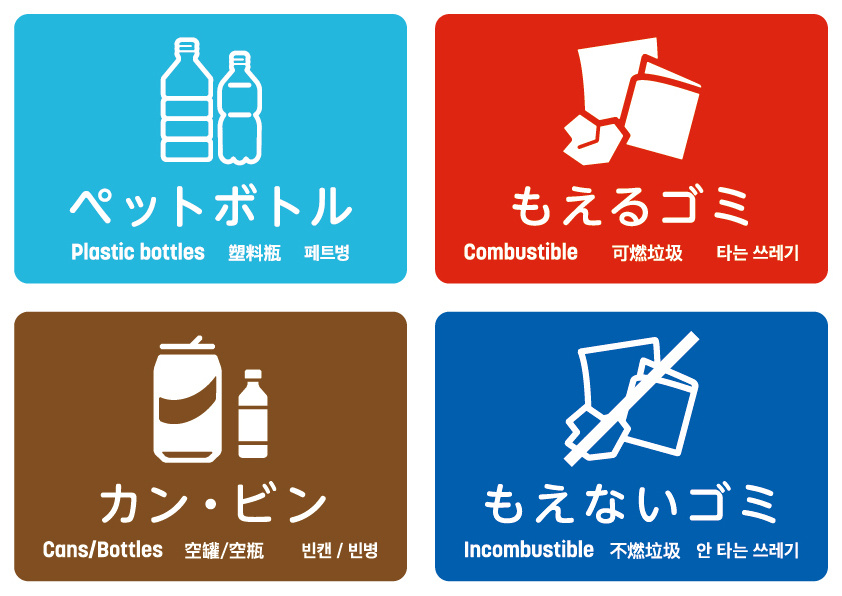
1. Burnable Garbage (可燃ごみ)
Burnable garbage usually includes:
Food waste
Dirty paper or tissues
Small non-recyclable items
Certain plastics depending on the area
This type of garbage is typically collected
the most frequently.
2. Non-Burnable Garbage (不燃ごみ)
Non-burnable garbage may include:
Metal products
Glass items
Ceramics
Small electronic devices
In many areas, non-burnable garbage is
collected less often than burnable garbage.
3. Recyclable / Resource Garbage (資源ごみ)
This category often includes:
PET bottles
Cans
Glass bottles
Cardboard
Newspapers and magazines
Many areas require these items to be
cleaned and sorted properly before disposal.
For example:
PET bottle labels and caps may need to be
separated
Cardboard boxes are often folded and tied
together
4. Oversized Garbage (粗大ごみ)
Large household items such as:
Chairs
Tables
Shelves
Suitcases
Mattresses
are usually classified as oversized
garbage.
In most cities, oversized garbage cannot be
thrown away freely. Residents generally need to:
Make a reservation with the local city
office
Pay a disposal fee
Attach a designated disposal sticker
Garbage Rules Depend on the Area
One important thing to know is that garbage
rules are not identical across Japan.
Different cities or wards may have
different:
Garbage categories
Collection schedules
Disposal methods
For example:
Some areas classify certain plastics as
burnable garbage
Other areas require separate recycling
Collection days also vary depending on the
location.
Because of this, residents should always
check the local garbage guide after moving.
Collection Days and Garbage Areas
In Japan, garbage is usually placed outside
only on designated collection days.
Apartment buildings often have:
Specific garbage collection areas
Rules regarding disposal times
Building-specific instructions
If garbage is disposed of incorrectly, it
may not be collected.
Confirm Rules with Your Management
Company
When moving into a new apartment, it is
helpful to confirm:
The garbage collection location
Collection schedules
Whether designated garbage bags are
required
-------------------
If you are planning to move to Tokyo and need professional rental assistance, our company specialises in helping international clients secure apartments in Japan. We provide support in English, Chinese, Spanish, and Japanese.
Mitsumaru Real Estate Agency
三丸商事株式会社
Contact: mitsumaru.shoji@gmail.com